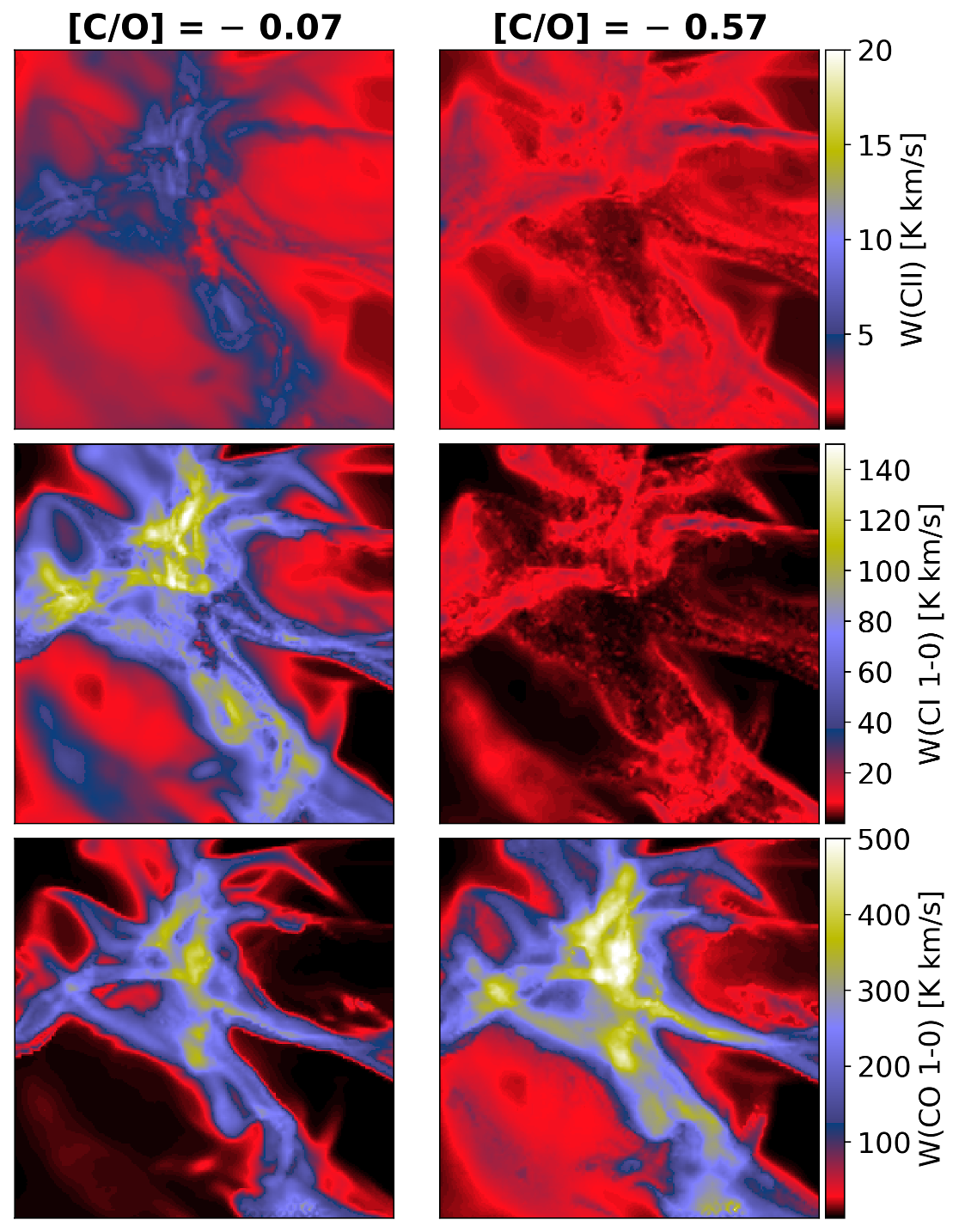
α-enhanced PDR chemistry
Astrochemistry has been widely developed as a power tool to probe the physical properties of the interstellar medium (ISM) in various conditions of our Galaxy, and in near and distant
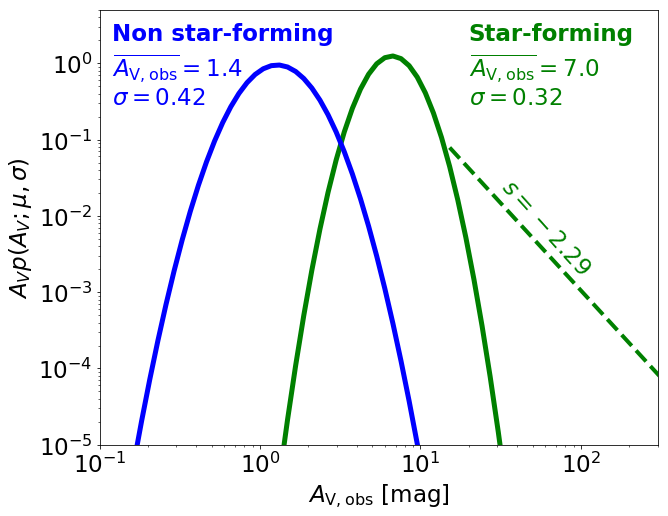
Determining the PDR properties using probability density functions
Determining the photodissociation region (PDR) properties of the interstellar medium (ISM), such as the atomic and molecular mass content, is of fundamental importance to understand the star-formation process. The advent
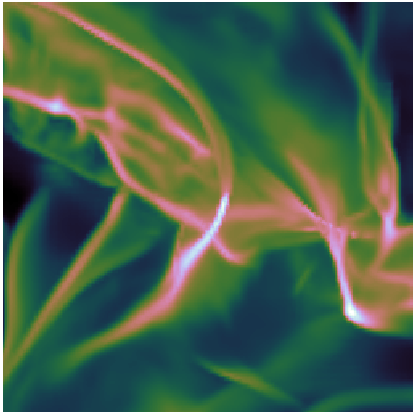
Photodissociation region diagnostics
To determine the physical properties and evolution of the interstellar medium (ISM), we need to model its chemical conditions, since these help set its heating & cooling rates and ionization
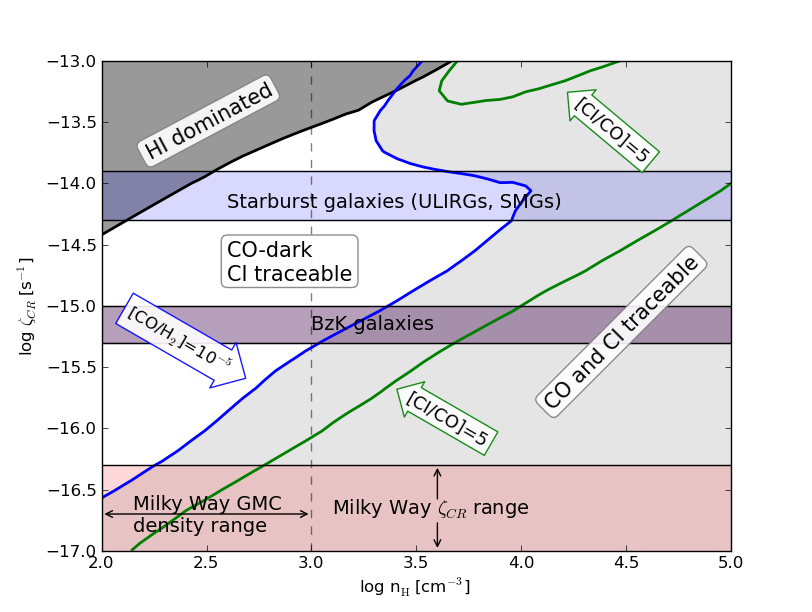
Cosmic-ray induced destruction of CO
Cosmic-rays are relativistic charged particles (and not "rays" in terms of electromagnetic radiation) and play an important role in regulating the chemistry at high column densities. These high column-densities are
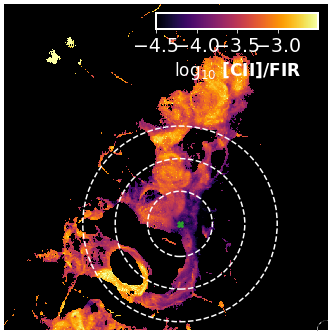
Origin of the [CII]-deficit
The line of ionized carbon at 158μm, denoted as [CII], is one of the brightest lines originating from star-forming galaxies. Under typical environmental conditions of the interstellar medium (ISM), the
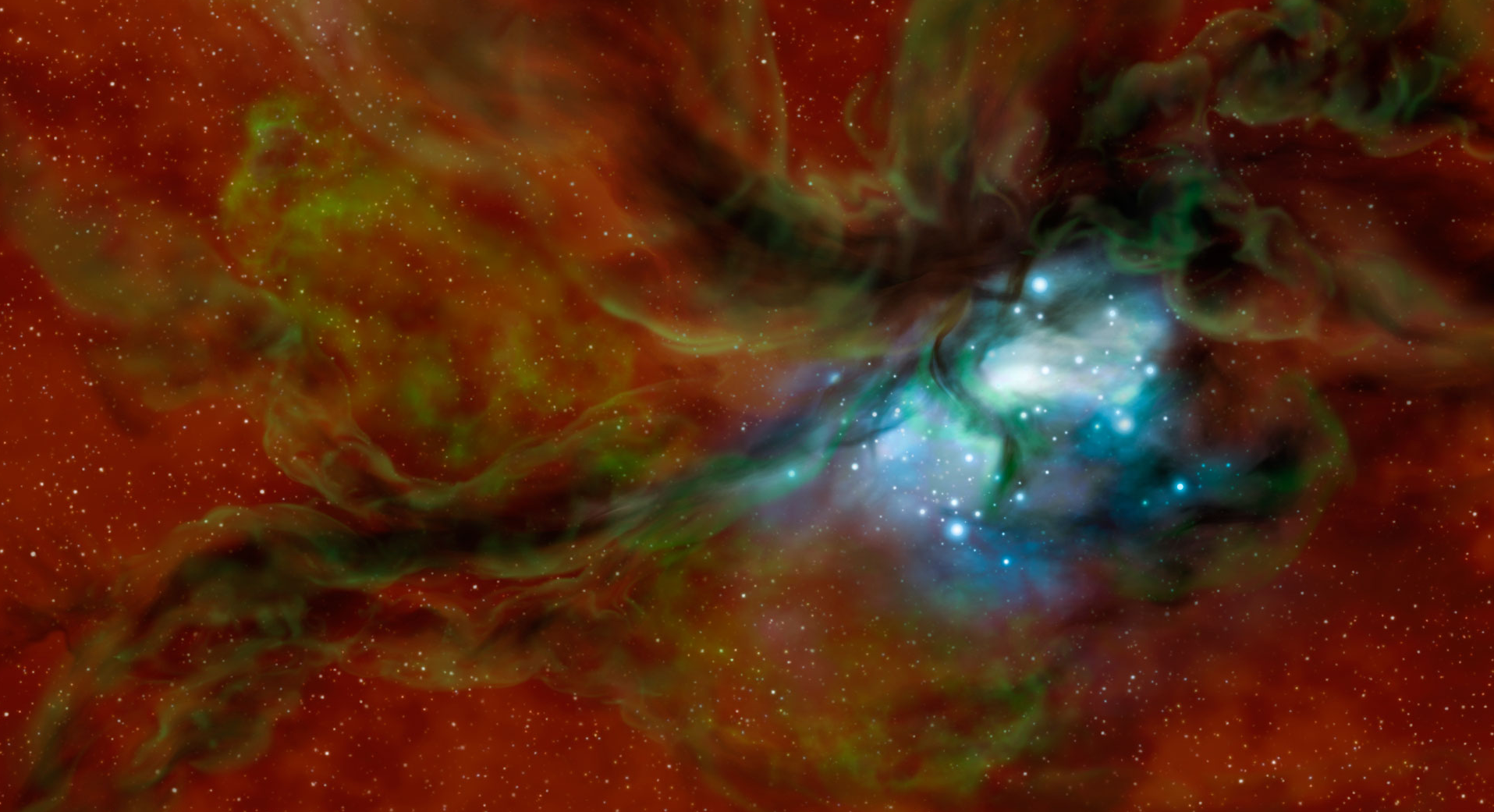
Expansion of HII-regions
Massive stars emit copious amount of photons that are able to ionize the atom of hydrogen in their nearby environment of the interstellar medium (ISM). This influence of UV radiation
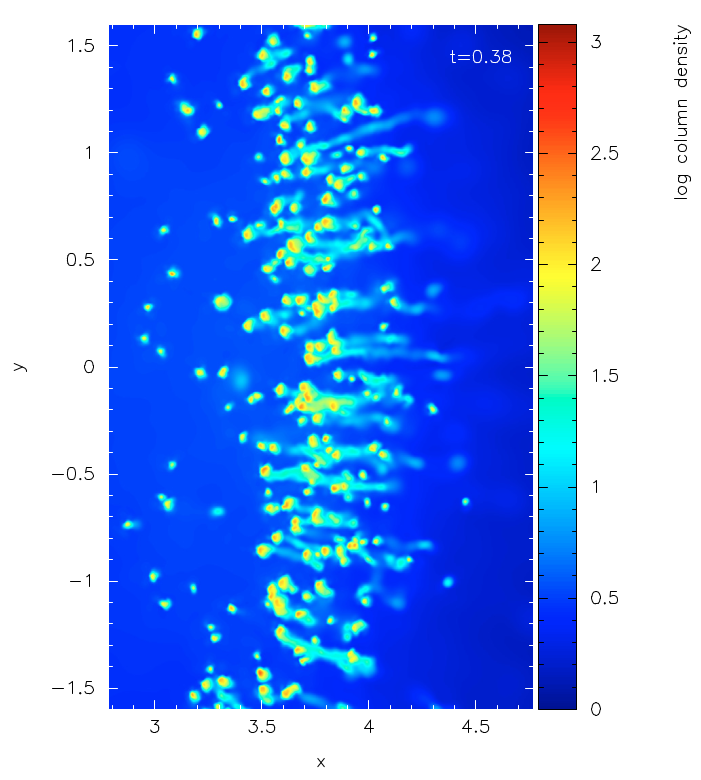
Fine-structure lines as diagnostic for cloud-cloud collision activity
The dominant process for the galactic star formation is believed to be the collision between giant molecular clouds. The collision triggers the gravitational collapse of the merged clouds, creating star